Foundation installation
Install a residential concrete foundation for new builds or replacement projects with proper site assessment and drainage.
Learn more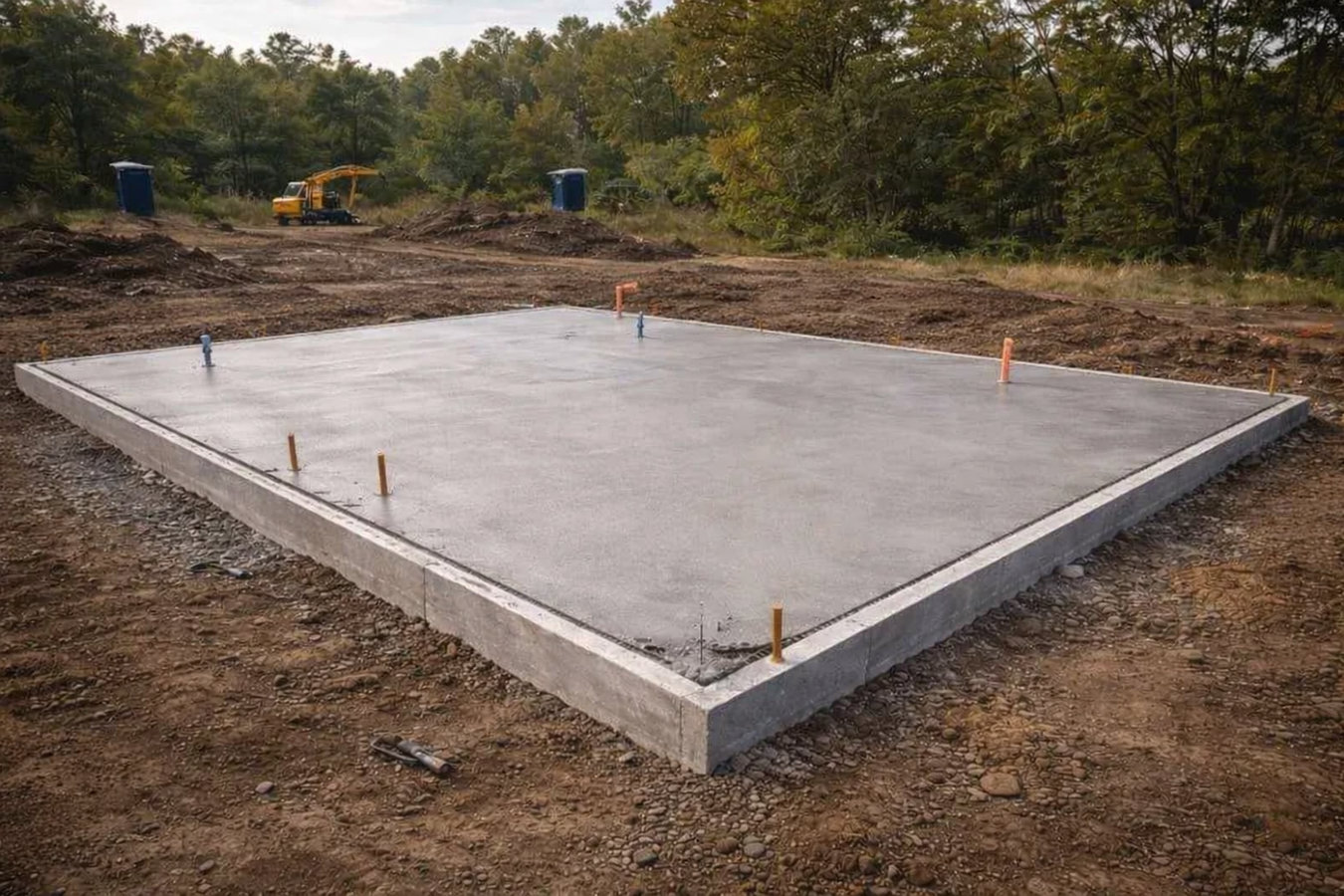
Temple's Blackland Prairie clay moves with every wet season and every drought. We build slabs with soil stabilization and deep perimeter beams so your home stands firm for decades.
Slab foundation building in Temple, TX creates the concrete base that carries your home's weight and provides the floor structure - most residential slabs are poured and cured within 7 to 10 working days, with soil prep and inspection time built into that window.
If you're building a new home, a garage addition, or any permanent structure in Temple, the slab is the first step - nothing goes up until this is in place and inspected. The Blackland Prairie clay under most of Bell County swells when it rains and shrinks when it dries out, which is why soil stabilization and proper drainage are not optional extras here. We've built slabs throughout Temple and know what the ground under your lot is actually doing through every season.
If you're starting from raw land and need the underground footings poured first, check out our concrete footings work - many new builds in this area require both perimeter footings and the slab to be engineered together from the start.
If you've purchased land in Temple and are starting a new build, the slab foundation is the first structural step - nothing happens until this is in place and passes city inspection. The lot needs to be cleared, graded, and assessed for soil conditions before the pour can be scheduled. Waiting too long after clearing the lot can allow the soil to settle unevenly, which complicates prep work later.
Hairline cracks in an older slab are normal, but cracks you can fit a coin into, diagonal cracks from door corners, or areas where one side of the crack is higher than the other signal real movement. In Temple's clay soil, this kind of movement is common over time and worth having a professional evaluate. Replacing a failing slab is a major project, but ignoring it leads to cracked walls, sticking doors, and structural problems throughout the home.
When a slab shifts - which happens frequently in Central Texas clay soil as it swells and shrinks with rain and drought - the frame of the house moves with it. If doors that used to close easily now stick or won't latch, or if you see gaps forming at the tops of door frames, the foundation may be the cause. This is one of the most reliable early warning signs homeowners in this area notice first.
Any addition to your home that will be permanently attached needs its own properly built foundation to match. In Temple, where soil movement is a known issue, tying a new addition to an existing structure without a correctly engineered slab underneath can cause the addition to pull away from the house over time. If you're planning an expansion, a new slab is part of the project - and it likely needs its own permit and inspection from the city.
We build standard 4- to 6-inch residential slabs with deeper perimeter beams, post-tension slabs for lots with soil challenges, and monolithic slabs where the footing and floor are poured in one continuous operation. Every project begins with a soil assessment, because the clay ground in Bell County behaves differently from lot to lot depending on drainage and past disturbance. Soil stabilization - typically chemical treatment with lime or cement - is part of the process here, not an optional add-on. Without it, the slab will eventually crack or settle as the clay underneath expands and contracts through the seasons.
If your project includes engineered footings that support load-bearing walls or posts, we coordinate that work with the slab pour so everything is tied together structurally - see our concrete footings work for more on that process. For homeowners starting from scratch on a vacant lot, our foundation installation service covers the full site-to-slab process including permitting, inspection coordination, and curing management through Temple's hot summers. Every slab we build is permitted through the City of Temple and inspected before the pour - we don't skip steps that protect you later.
4- to 6-inch slabs with 12- to 24-inch deep perimeter beams for typical single-family homes.
Best for lots with challenging clay soil conditions - steel cables inside the slab resist cracking from soil movement.
Perimeter footings and floor poured in one operation - faster and well-suited to most Temple residential lots.
Chemical treatment and compaction of Blackland Prairie clay before the pour - standard practice for this region.
Full building permit from the City of Temple with pre-pour and final inspections - we handle the coordination.
Scheduled early-morning pours and moisture-protected curing plans during Temple's 100-degree summer months.
Temple sits squarely on the Blackland Prairie, a belt of heavy clay soil that runs through Central Texas and is infamous among contractors for swelling and shrinking dramatically with every wet season and every drought. A slab built without accounting for that movement will crack within a few years - it's not a question of if, but when. Soil stabilization, proper moisture barriers, and engineered perimeter beams are standard practice here because the ground demands it. If you're hiring a contractor who doesn't mention soil prep during the first visit, that's a red flag worth noting.
Temple summers regularly exceed 100 degrees, and that extreme heat can pull moisture out of fresh concrete faster than it should dry - a process that weakens the slab from the surface down. We schedule pours for early morning during summer months and take active steps to protect the surface during curing, because a slab that cures too fast in the Texas heat will crack and spall before you ever move into the house. We serve homeowners throughout Temple and across Bell County, including nearby Belton and Harker Heights, where the same soil and climate conditions apply to every new build and addition project.
You reach out, describe your project, and we schedule a visit to your lot. At that visit, we assess the soil, drainage, and grade, then give you a written estimate that includes soil prep and permit fees. You'll hear back within one business day.
We apply for a building permit through the City of Temple Development Services office in our name, which makes us legally responsible for the work. This typically takes a few business days. You don't handle any of the paperwork - we coordinate directly with the city.
The crew grades the lot, removes debris, and treats the clay soil with lime or cement to stabilize it. This is the most important step most homeowners never see - it determines how well the slab holds up for decades. We don't skip it to save time or money.
We build the forms, lay the moisture barrier, and install the steel reinforcing grid. A city inspector visits before any concrete is poured to confirm everything is correctly placed. This inspection protects you - it's your assurance that what gets buried is done right. We schedule it and wait for approval before pouring.
Concrete trucks arrive and we pour, spread, and finish the slab in a single continuous operation. For a typical home, this takes one full day. During Temple's summer heat, we schedule pours for early morning to give the crew and the concrete the best working conditions.
The slab needs at least a week before framing begins and about a month to reach full strength. During hot months, we protect the surface from drying too fast. A final city inspection confirms the work is complete and your permit is closed out - that record stays with the property and protects you when you sell.
We'll visit your lot, assess the soil, and give you a written estimate that includes permit fees and soil prep - no surprises after you sign.
(254) 791-8108The Blackland Prairie clay under Temple moves with every wet season and every drought - it's not optional soil, it's the ground condition here. We treat and compact every lot before pouring concrete, because a slab built without it will crack within a few years. That cost is built into our estimates up front, not sprung on you after you sign.
Temple, Belton, and Harker Heights all sit on the same clay soil belt, and we've built slabs throughout the area. That local volume means we know what the city inspector looks for, what soil conditions to expect lot to lot, and how to schedule pours around Temple's summer heat. Experience in this specific region matters more than a contractor's total years in business.
Your written quote covers site prep, soil treatment, steel, the pour, permits, and curing protection. If something unexpected comes up during the job - which happens occasionally when you dig into the ground - we talk to you before spending a dollar more than what was agreed. Learn more from the American Concrete Institute about what goes into a properly built slab.
We pull the permit in our name, coordinate the pre-pour inspection, and close out the final inspection after curing is complete. That permit stays on record with the property and protects you when it's time to sell - buyers and their inspectors check for this. A slab built without a permit is a red flag that can kill a sale or cost you thousands in renegotiation.
When you call us, you're working with a crew that builds slabs every week in Bell County and knows what the ground here does through every season - not a general contractor who pours a slab once or twice a year.
Install a residential concrete foundation for new builds or replacement projects with proper site assessment and drainage.
Learn morePour deep, reinforced footings that anchor structures securely in Bell County's expansive clay soil.
Learn moreSpring and fall build slots book fast in Temple - reach out now to lock in your start date and get on the permit schedule.