Foundation raising
Lift and stabilize a settled foundation that has shifted due to Temple's expanding and contracting clay soil.
Learn more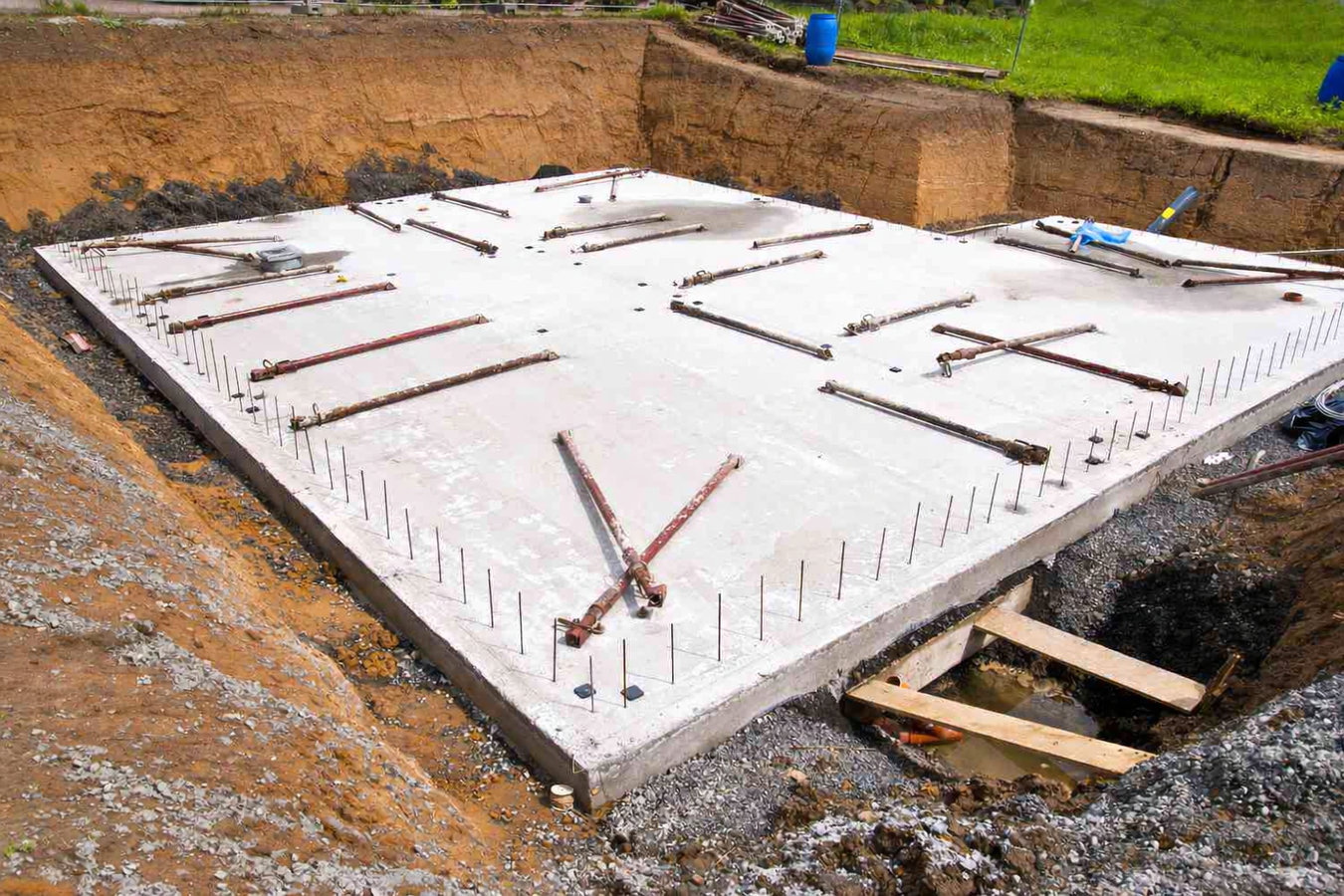
A footing that sits in Temple's active clay never stays put. We dig to stable ground, reinforce where required, and cure properly - so the structure you are adding does not move.
Concrete footings in Temple, TX involve excavation to stable soil, utility marking, forming, steel reinforcement where required, and a curing plan suited to the climate - most residential footing projects run three to seven days of active work from permit approval to a passed city inspection.
A footing is the underground base that holds up whatever sits on top of it - a deck, porch, room addition, detached garage, or fence post. In most of the country, a standard depth footing works just fine. In Temple, the ground is Blackland Prairie clay, and that clay moves. It swells every time it rains and shrinks during dry stretches. A footing that sits in the active clay layer will follow that movement, shifting the structure above it in ways that show up as sticking doors, cracking walls, and gaps between framing and floors.
If your project involves a full foundation rather than individual footings, our foundation installation service covers the complete residential slab process - from soil assessment through city inspection sign-off.
If a door or window that used to open and close smoothly has started sticking, dragging, or leaving a gap at the top or bottom, the frame around it may have shifted. In Temple's clay soil, this kind of movement often traces back to a footing that was not deep enough to stay stable through the wet-dry cycles the ground goes through each year. It is worth having a contractor look at the foundation before the problem gets worse.
Diagonal cracks in drywall or brick - especially ones that start at the corners of windows and doors and run at a 45-degree angle - are a classic sign that part of a structure has settled unevenly. In Temple, this pattern is especially common after a dry summer followed by heavy fall rains, when the clay soil swells back up after months of shrinkage. A crack that appeared after a weather shift is worth taking seriously.
If you can see that a deck or covered porch has started to tilt, or if there is a growing gap between a structure and your home's exterior wall, the footings underneath it have likely shifted or deteriorated. This is a safety issue, not just a cosmetic one. The problem will not resolve itself and should be evaluated before the structure is used.
Any new structure attached to or built near your home needs proper footings before framing begins. If you are planning a project like this in Temple, getting the footings right is the first step - and skipping or cutting corners on them is the most common reason additions and decks develop problems within a few years of construction.
We pour concrete footings for residential additions, covered patios, decks, detached garages, carports, fences, and other structures across Temple and Bell County. Every project starts with a site visit - we look at what you are building, where it is going on your property, and what the soil conditions are like at that specific spot. Footing depth, diameter, and reinforcement all depend on those conditions, and on what the City of Temple's permit process requires for your project type. We handle the permit application, coordinate the pre-pour inspection, and do not place a single yard of concrete until the city has signed off on the setup.
For homeowners whose projects require a complete slab rather than individual footings, our foundation installation service handles the full residential slab process. For properties where an existing foundation has settled and needs to be lifted back to level, our foundation raising service covers that scope. Both services are handled by the same crew with the same local experience - so if your project overlaps, we can assess the full picture during one site visit.
Suits room additions and covered patios that require a footing running along the full perimeter of the new structure.
Suits raised decks, covered porches, and freestanding structures where individual post footings at each support point are required.
Suits Temple homeowners whose existing deck, addition, or outbuilding has settled and needs the original footing corrected.
Suits carports, detached garages, and accessory structures where additional rebar is required to handle the load and soil conditions.
Suits any structural project in Temple - we handle the City of Temple permit and coordinate the required inspection before the pour.
Suits homeowners who have been told by an inspector or contractor that their existing footing is shallow or showing signs of movement.
Bell County sits in the middle of the Blackland Prairie - a region where the soil is a heavy, dark clay sometimes called "black gumbo" by locals who have watched it crack apart in a dry July and then swell back up after the first fall rains. That behavior is normal for this soil type, but it is hard on anything buried in it. A footing that sits in the active clay layer follows the soil - up a little in wet months, down a little in dry months, year after year. Over time that movement shows up in the structure above: sticking doors, diagonal cracks, and decks that have pulled away from the house. Getting below the active layer to stable ground is not extra caution here, it is the minimum standard for work that will hold.
The American Concrete Institute sets professional standards for footing depth, reinforcement, and curing - and those standards matter more in an expansive soil environment like Temple than in most places. We serve homeowners throughout the area, including properties in Belton and projects in Harker Heights. The soil conditions across this part of Bell County are similar enough that local experience matters - a contractor who has never worked in this region is guessing at depths and reinforcement that experienced Temple-area crews already know from the ground up.
We schedule a free visit - usually within a few days of your call. We look at what you are building, measure the site, and check the soil conditions. You get a written estimate that covers digging, materials, labor, reinforcement, and permit fees. No phone estimates without a site visit.
We apply for a building permit through City of Temple Development Services before any work begins. For straightforward residential projects, approval typically takes a few business days. We factor the permit timeline into your schedule - so there are no delays after you have already committed to a start date.
Before any digging starts, we call Texas 811 to have underground utility lines marked in your yard. This takes one to three business days and happens before our crew sets foot on your property with a shovel. The excavation goes deep enough to reach stable soil below the active clay layer - the city inspector will verify this before the pour.
After the forms and steel are set, the city inspector visits to verify the setup. Once approved, we pour the concrete. In summer, we schedule early-morning pours and apply curing protection to keep the surface from drying out too fast. Plan on seven days before any load goes on the footing, and up to 28 days for full concrete strength.
We will visit your site, assess the soil conditions, and give you a written estimate with permit and inspection steps included - no obligation. Most replies within one business day.
(254) 791-8108Bell County's Blackland Prairie clay is active enough that a footing sitting in it will move with the seasons. We excavate to stable, undisturbed soil on every project - not just on the jobs where the soil conditions happen to be obvious. That single step is the difference between a structure that stays put and one that shifts within a few years.
City of Temple building permits for footing work are handled entirely by our crew - you do not need to visit Development Services, fill out forms, or track down an inspector. We submit the application, schedule the pre-pour inspection, and do not place concrete until the city has signed off. Your project is on record and fully above board.
We have poured footings for decks, additions, garages, and covered patios across Temple, Belton, Harker Heights, and surrounding communities. That local track record means you can ask for a reference from a property near yours - not a testimonial from somewhere else in Texas.
Before any excavation, we call Texas 811 to have underground utilities marked. This is required by law in Texas, but not every crew takes it seriously on small jobs. We treat it as a non-negotiable step on every project, because hitting a buried utility line is expensive and dangerous for everyone on site.
Footing work in Temple is not complicated, but it does need to be done in the right order - permit first, inspection before the pour, curing before load. That sequence protects your investment, and it is what every project we take on follows.
Lift and stabilize a settled foundation that has shifted due to Temple's expanding and contracting clay soil.
Learn moreInstall a complete new residential foundation with soil assessment, drainage planning, and city permit sign-off.
Learn moreSpring and fall booking windows fill fast - reach out now to hold your spot before the next project wave hits.