
Decorative concrete
Add color, texture, or a stamped pattern to your garage floor or any other concrete surface for a finished look that lasts.
Learn more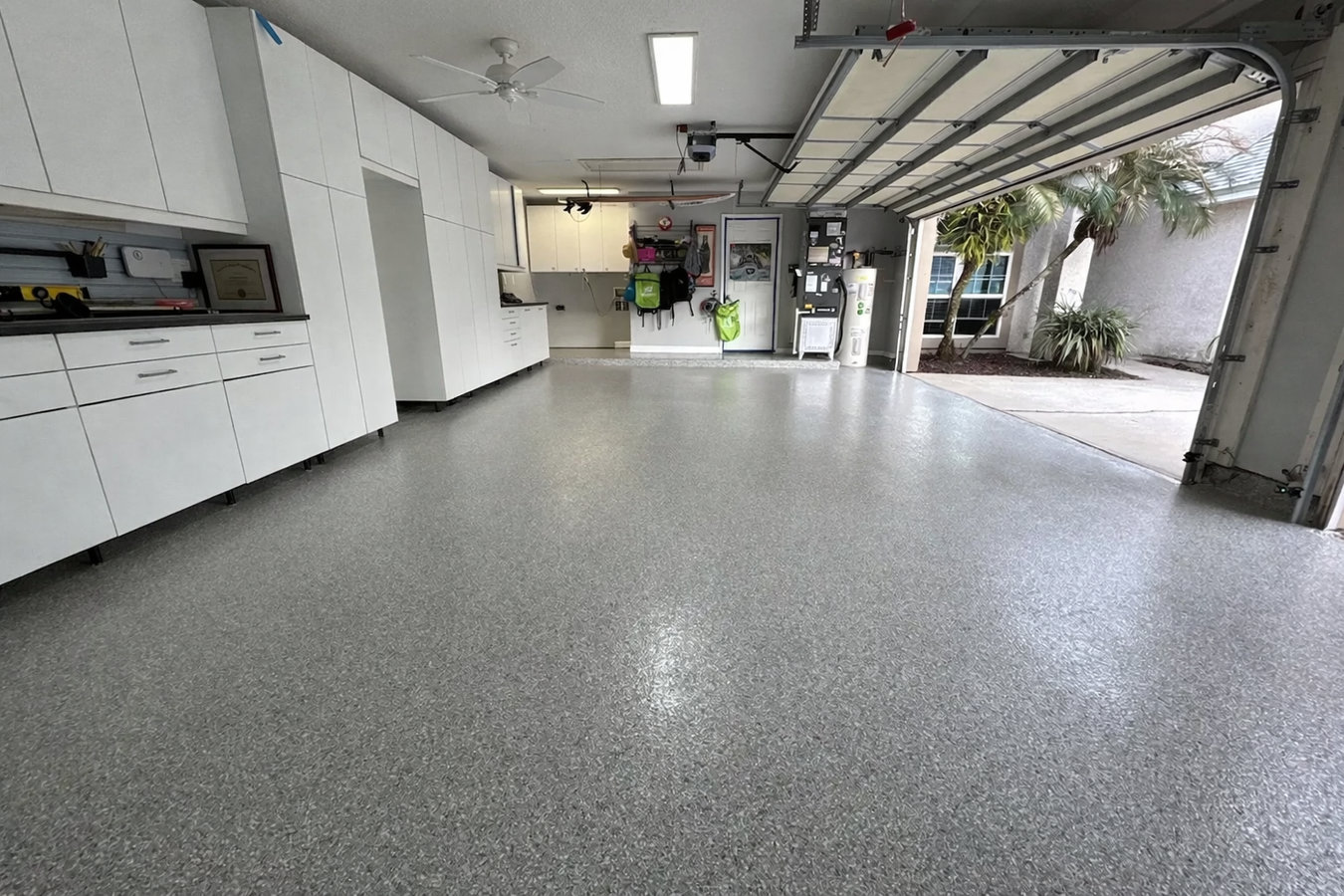
Cracked, uneven garage floors in Temple usually start with the soil, not the concrete. We fix that from the ground up so your new slab stays level for the long haul.
Garage floor concrete in Temple, TX starts with removing the old slab, grading and compacting the soil underneath, and pouring fresh concrete to a flat, finished surface - most standard two-car garage floors take one to two days of active work, with a seven-day curing period before you park on it.
The reason so many garage floors in Temple crack or heave is the Blackland Prairie clay under the city. That soil swells when it rains and shrinks when the ground dries out - and anything sitting on top of it takes the hit. Getting the base right before the pour is the single most important step, and it is the one most contractors skip to save time. We do not skip it.
If you are also thinking about the garage walls or a workshop space, take a look at our decorative concrete options - many homeowners combine a new floor pour with a colored or textured finish so the garage ends up looking as good as it functions.
A hairline crack here or there is normal. But if a crack is wider than a quarter inch, or if you can tell it has grown since last year, the slab underneath is shifting. In Temple, that movement is almost always tied to the clay soil expanding and contracting with the seasons. Patching may slow it down, but if the base was not prepared properly the first time, a new pour is usually the better long-term fix.
If part of your garage floor has lifted or sunk so there is a noticeable step or slope, the soil underneath has moved. This is common in Temple after a dry summer followed by heavy rain, when the clay shifts significantly. An uneven floor is a tripping hazard and also makes it nearly impossible to properly seal or coat the surface - water finds every low spot.
A properly poured garage floor slopes slightly toward the door so rain and wash water drains out. If you see puddles forming in the middle or back of your garage after a storm, the floor was either not poured with the right pitch or has settled unevenly over time. Standing water speeds up surface damage and can seep under the slab, making the soil problem underneath progressively worse.
When the top layer of concrete starts peeling away in chips or crumbling when you sweep it, the surface has deteriorated past the point where patching helps. This often happens when concrete was poured during extreme heat without proper curing - a common issue in Central Texas summers. Once the surface starts going, it tends to accelerate quickly.
We pour standard broom-finished garage floors and thicker reinforced slabs for homeowners who store heavy equipment or plan to convert the space into a workshop. A broom finish is the most popular choice - the slight texture gives tires grip in wet weather and holds up well without any coating on top. If you want to add an epoxy coating later, we can prepare the surface for that from the start so it bonds properly when you are ready.
Every pour includes proper base preparation, control joints, and a slope toward the door for drainage. We also handle full demo of the old slab when there is one - the crew breaks it up, hauls it away, and starts fresh. Homeowners who want a finished look in their garage often pair a new floor with our concrete floor installation work, which covers interior spaces like workshops, laundry rooms, and utility areas that need the same level of durability.
Best for homeowners who want a clean, durable garage floor at the most cost-effective price per square foot.
Suits homeowners with heavy trucks, RVs, or workshop equipment that puts more load on the floor than a standard pour handles.
Good for homeowners who plan to add an epoxy coating - the surface is finished to bond properly instead of needing grinding later.
For floors that have cracked, heaved, or settled beyond repair - the old slab comes out, the base is corrected, and you start with a fresh pour.
Suits homeowners building a new garage or adding a detached structure who need the floor poured as part of the overall project.
For homeowners who need water to exit the garage efficiently - we set the pitch during forming so it drains toward the door by design.
Temple sits in the Blackland Prairie region, where the soil is some of the most expansive clay in Texas. When it rains, the ground swells and pushes up on anything sitting above it. When the summer heat kicks in and the ground dries out, it contracts and pulls away. A garage floor sitting on that clay without a well-compacted base will crack, shift, and start pooling water within a few years. The homeowners who call us most often are the ones who got a cheap pour the first time and are now dealing with that reality. The fix is proper base work before the pour - not after.
Temple's summer heat adds another layer of difficulty. Concrete poured in 95- to 100-degree weather dries out on the surface before the slab has fully cured underneath, which leads to surface cracking even when the mix is right. We schedule summer pours for early morning and take steps to keep the surface from curing too fast. Whether you are in an older neighborhood close to downtown or out in one of the newer subdivisions near Belton or Harker Heights, those conditions are the same and they shape how we do every pour.
Call or fill out the contact form and you will hear back within one business day. We ask a few quick questions - garage size, whether there is an old slab, and what you want the finished floor to do - so we can come prepared.
A crew member comes out to measure the space, check the existing slab, and look for obvious signs of soil movement or drainage problems. This visit is free and there is no obligation. We will not give you a firm price without seeing the garage first - the condition of the base can change the scope significantly.
After the visit you get a written estimate that covers demo, base prep, the pour, and cleanup. If your project needs a city permit, we handle that process. No line items appear later that were not in the original quote.
On the day we start, the crew breaks out the old slab if there is one, hauls it away, grades and compacts the soil, sets the forms, and pours the concrete - typically in a single day. You will need the garage completely empty before we arrive.
You can walk on the surface after 24 to 48 hours. Parking a vehicle on it takes seven days. We will cover the slab if needed and give you clear written instructions for the curing window so nothing gets damaged from moving in too soon.
Free estimate, written quote, no obligation. We reply within one business day.
(254) 791-8108Our work is concentrated in Temple and the surrounding Bell County area - Belton, Killeen, Harker Heights, and nearby communities. That focus means we have hands-on experience with the clay soil conditions and permit requirements specific to this area, not just general concrete knowledge from somewhere else.
We pull the required city permits for garage floor projects and handle the inspection process. That paperwork protects you when you sell your home - unpermitted concrete work is the kind of thing that shows up during a buyer's inspection and can slow or derail a sale.
Temple's heat is hard on fresh concrete. We schedule summer pours for early morning and use techniques to slow the surface from curing too fast in the heat. This is the difference between a floor that looks right at first and one that actually holds up year after year. The American Concrete Institute sets the professional standards we follow for hot-weather pours.
Your quote covers demo, base prep, the pour, and cleanup. If something unexpected comes up during the job, we talk to you before spending a dollar more than what was agreed. The price you sign is the price you pay.
Garage floor work in Temple lives or dies on base preparation and timing. Those two things are where we put our attention, and they are why our floors hold up when others do not.
The American Concrete Institute publishes the standards that guide how residential slabs are mixed, poured, and cured. For permit information, visit Temple Development Services.
Add color, texture, or a stamped pattern to your garage floor or any other concrete surface for a finished look that lasts.
Learn moreInterior concrete floor pours for workshops, basements, and utility spaces that need a clean, level surface built to handle heavy use.
Learn moreSummer slots fill fast - reach out now to lock in your date before the calendar fills up.