Concrete floor installation
Pour a new interior or exterior concrete slab built to handle Temple's clay soil movement and summer heat.
Learn more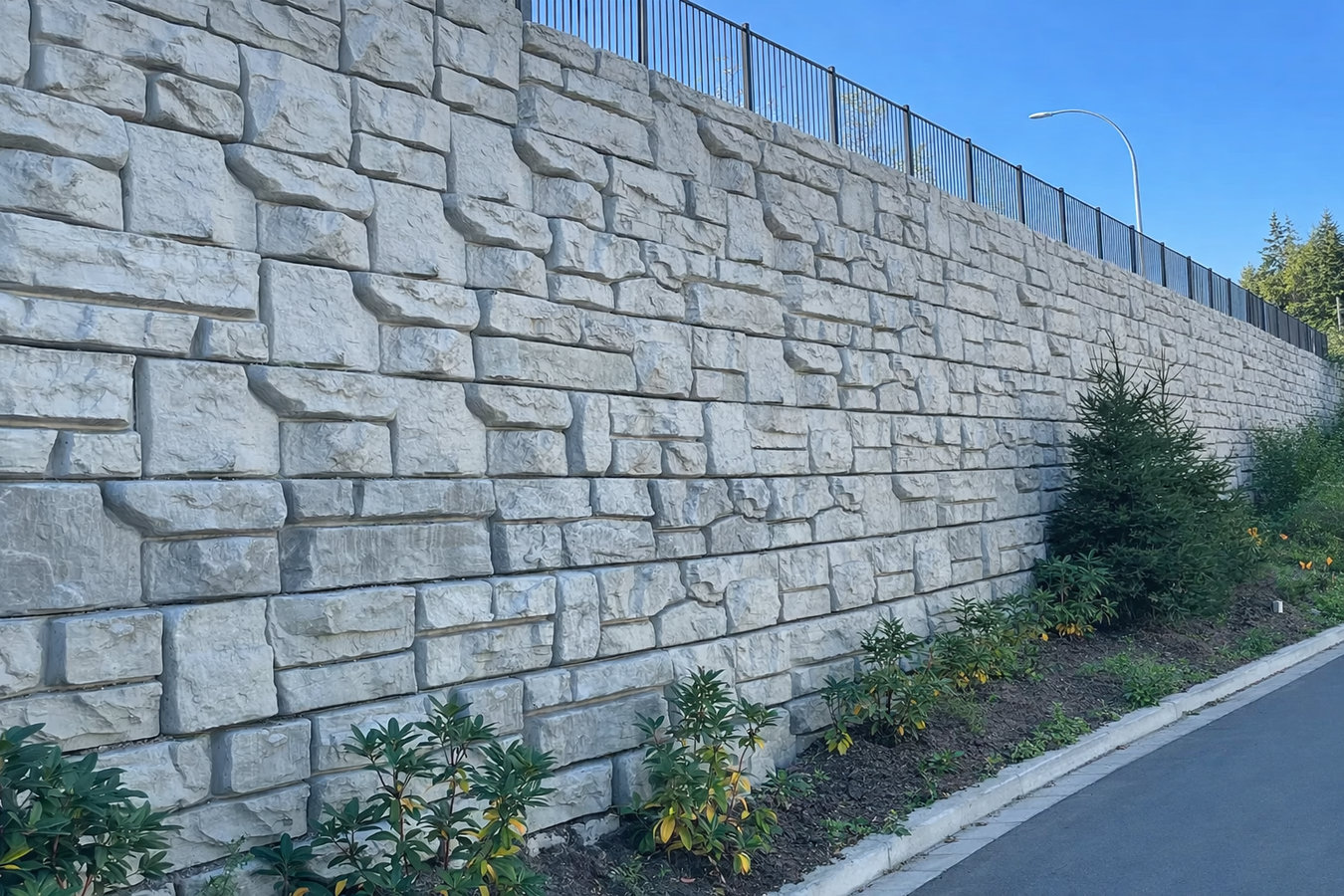
Temple's clay soil and heavy spring rains eat away at unprotected slopes. We build retaining walls with proper drainage and deep footings so your yard stays put through every wet season.
Concrete retaining walls in Temple, TX hold back soil on sloped or uneven lots, preventing erosion and protecting driveways, patios, and foundations - most residential walls are completed in one to three days of active work.
If you have a slope on your property, every heavy rain moves a little more soil downhill. Over time that adds up - bare spots where grass used to grow, sediment collecting at the base of the yard, and eventually erosion that reaches a fence, driveway, or foundation. A concrete retaining wall puts a permanent stop to that cycle. We work throughout Temple and know how the Blackland Prairie clay here behaves through every season.
If your project involves creating a flat outdoor space after the wall is in place, take a look at our concrete floor installation work - many homeowners add a patio or slab behind the wall once the slope is stabilized.
After a storm, if you see soil moving downhill, collecting at the base of a slope, or leaving bare patches where grass used to grow, your yard is actively eroding. Temple gets intense rain events that can move a significant amount of soil in a short time. Left alone, this gets worse with each storm season and can eventually reach a fence, driveway, or your home's foundation.
A wall tilting away from the soil it is holding back is under more pressure than it can handle. In Temple's clay soil, this happens because the soil behind the wall has expanded and contracted through several wet and dry cycles, gradually pushing the wall forward. Hairline cracks are normal in older concrete, but cracks that are widening, horizontal, or paired with any visible lean need professional attention soon.
Standing water against your house after a storm often means a poorly graded yard or a missing retaining wall is directing water toward your home instead of away from it. In Temple's clay soil, water sitting against a foundation causes serious long-term damage. A retaining wall combined with proper grading redirects that water and protects the slab beneath your home.
If a fence post, shed, or other structure near a slope is tilting or sinking on one side, the soil underneath is moving. This is especially common in Temple after a dry summer followed by heavy fall rains - the clay soil swells unevenly and shifts whatever sits on top of it. A retaining wall stabilizes the soil before the movement causes more expensive damage.
We build cast-in-place poured concrete walls and concrete masonry unit walls, depending on the height, soil conditions, and look you want. Poured concrete walls are the strongest choice for taller structural applications - the kind that hold back significant slopes near a home or driveway. They are formed and poured in a single pour, which gives them excellent structural continuity. Drainage gravel and perforated pipe go in behind every wall before we backfill, because in Temple's rainfall pattern, water management behind the wall is not optional.
For lower decorative walls - garden borders, raised planting beds, or low-grade changes in a backyard - concrete block gives more flexibility in shape and finish. We also tie retaining wall projects into related work when needed, including concrete footings for structural walls that require engineered designs, and concrete floor installation for the flat areas created once a slope is held back. Every project includes a site visit before any quote is given, because a retaining wall quote over the phone is rarely accurate.
Best for taller structural walls holding significant slopes near driveways, homes, or property lines.
Suits homeowners who want a lower decorative border or raised planting bed with more flexibility in shape.
Recommended for any wall taller than three feet where drainage behind the wall determines long-term performance.
For walls requiring City of Temple permits and engineer review - we handle the application and inspection scheduling.
For yards where active erosion is threatening a fence, structure, or foundation - the first step is stopping the movement.
For homeowners who want to create a usable flat outdoor space from a sloped backyard in one project.
Temple sits in Bell County, which is underlain by some of the most active clay soil in Texas - the same dark Blackland Prairie clay that runs through much of Central Texas. This soil expands when it gets wet and shrinks when it dries out, putting constant shifting pressure on any retaining wall. A contractor who builds a wall here without accounting for that soil movement is building something that will crack or lean within a few years. The right response is a deeper footing, drainage behind the wall, and enough reinforcement to handle what the ground is actually doing.
Temple averages around 35 inches of rain per year, and Central Texas is known for intense storms that can drop several inches in a matter of hours. That kind of sudden saturation puts enormous pressure on the soil behind a retaining wall - which is why drainage is non-negotiable here. We work across Temple and the surrounding area, including neighborhoods in Belton and Harker Heights, where the same clay soil and drainage challenges apply.
We reply within one business day. A retaining wall quote based on a phone description alone is rarely accurate, so we will schedule a free on-site visit to look at the slope, the soil, and how water currently drains across your property.
During the visit you will receive a written estimate that covers everything - including any City of Temple permit fees if your wall requires one. We pull the permit on your behalf; confirm this is included before signing anything.
The crew digs out the area and sets a solid footing below the surface - this is the noisiest part of the job. The footing depth is what anchors the wall against Temple's shifting clay soil, so it is not rushed. Call 811 a few days before work starts to have utilities marked for free.
The wall goes up with drainage gravel and pipe installed behind it before backfilling - ask your contractor to walk you through this before it gets covered. After the wall is complete, the crew cleans the site and gives you a clear curing timeline before the area is ready for normal use.
Free on-site estimate. Written quote before any work starts. We handle the City of Temple permit from start to finish.
(254) 791-8108We build for the actual soil conditions in Temple - deeper footings, gravel drainage backfill, and reinforcement sized for the pressure Bell County's clay puts on a wall. A contractor from outside the area may not factor this in from day one.
Temple averages over 35 inches of rain per year, often in short, intense bursts. Every wall we build includes a drainage system behind it - gravel and perforated pipe - because skipping that step is the most common reason walls fail in this climate.
We handle the City of Temple permit process from application to final inspection. A permitted wall has been reviewed by a city inspector - which protects your investment and shows up correctly when you sell your home.
Before we break ground, you have a written estimate covering all labor, materials, and permit fees. The number you agree to is the number you pay. For a reference on building standards, the American Concrete Institute publishes the guidelines that govern how structural walls should be built.
When you combine local soil knowledge with proper drainage work and permitted construction, you get a retaining wall that still looks right in 20 years. That is what we build here.
Texas contractors doing structural work should be registered with the Texas Department of Licensing and Regulation. Before excavation, call Texas 811 to have underground utilities marked for free.
Pour a new interior or exterior concrete slab built to handle Temple's clay soil movement and summer heat.
Learn moreDeep, reinforced footings that anchor structures securely in Bell County's shifting Blackland Prairie soil.
Learn moreSpring and fall book fast in Temple - lock in your project date before the summer heat arrives and slopes lose more ground to the rain.