
Concrete cutting
Precise diamond-blade cuts through driveways, slabs, or walls - often the first step before repairs or additions.
Learn more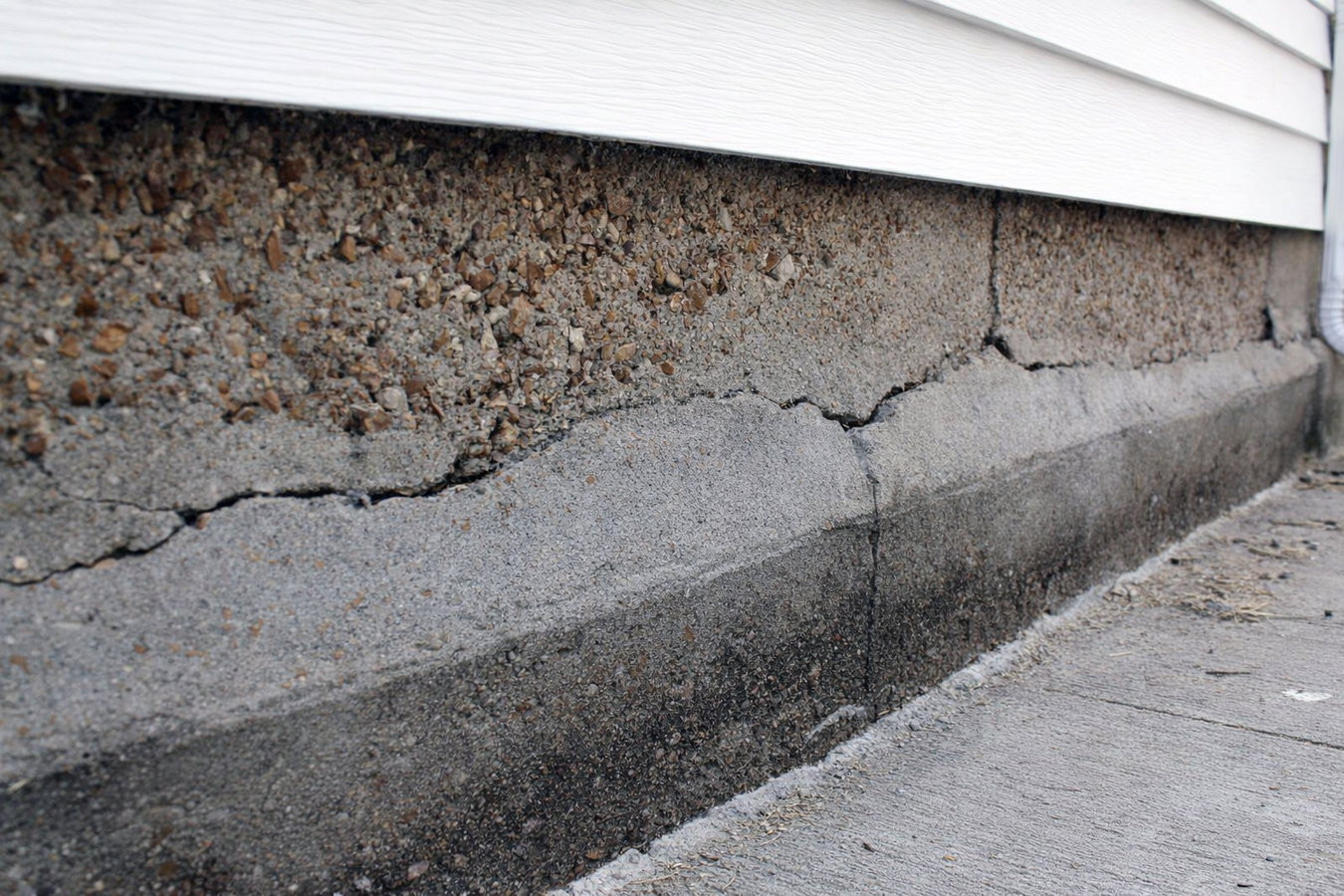
Temple's clay soil shrinks every dry summer and swells every wet season. That movement drops your slab - and it will not stop on its own. We lift it back, address the cause, and document every measurement.
Foundation raising in Temple, TX lifts a settled or tilted slab back to its original position using steel piers or foam injection - most residential jobs take one to three days on-site after the City of Temple permit is approved.
If your doors stick, your floors feel sloped, or you can see diagonal cracks spreading from door corners, your foundation has likely dropped in one or more areas. In Temple, this is almost always caused by the Bell County clay soil - it expands when it rains and contracts during dry stretches, and that cycle gradually pulls the slab out of position. Foundation raising is the process of pushing or lifting that slab back up and stabilizing it so it stays there.
If you suspect the settling has reached the point where a new slab is needed rather than a repair, our slab foundation building service covers a full replacement with soil assessment and city permit coordination included.
If a door that swung freely now catches on the floor or frame, or a window that used to slide easily now requires force to open, the frame around it has likely shifted out of square. In Temple, this symptom often appears after a long dry stretch when the clay soil contracts and the slab drops beneath it. It is one of the earliest and most reliable signals that foundation movement has already begun.
Cracks that run at a 45-degree angle from the corners of door frames or window openings are a textbook sign of uneven foundation movement. Hairline cracks from normal settling are common in any home, but cracks wider than a quarter-inch, or cracks that have grown noticeably over a season, deserve a professional evaluation. Temple's wet-dry soil cycles can cause these cracks to open and close seasonally, which is itself a warning sign.
Walk along your interior walls and look where the wall meets the ceiling and where baseboards meet the floor. Gaps or separations that have appeared recently - especially if they are uneven across the room - suggest the structure is moving beneath your feet. This is different from normal caulk shrinkage and should be evaluated before the movement progresses.
On brick homes, look for cracks that follow a stair-step path along the mortar joints. This pattern almost always indicates that the foundation beneath that section has shifted. In Temple's older neighborhoods, where brick veneer ranch homes from the 1970s and 1980s are common, stair-step cracking is a frequently seen warning sign that homeowners sometimes mistake for simple aging.
We lift residential slab foundations across Temple and Bell County using two primary methods: steel pier installation and foam injection. Steel piers are driven deep past the active clay layer into stable load-bearing soil below - this is the standard approach for significant settling on a full slab foundation and is designed to last the life of the home. Foam injection is faster and less invasive, often completed in a single day, and is typically used for smaller sections of concrete like driveways, garage floors, or walkways that have shifted. Both methods include before-and-after elevation measurements, city permit coordination, and a written warranty on the completed work.
For homeowners whose situation requires a fully new slab rather than a repair, our slab foundation building service handles the complete new-pour process from soil prep through city inspection. And if the project involves adding concrete footings for an attached structure, our concrete cutting service is often part of the scope when old material needs to be removed or modified before repairs begin.
Suits Temple homeowners with significant slab settling where a permanent, deep repair is needed to reach stable soil below the clay.
Suits driveways, garage floors, and isolated sections of a slab where targeted, minimally invasive lifting is the right scope.
Suits any structural foundation repair in Temple - we pull the permit, coordinate the city inspector visit, and provide you with documentation.
Suits homeowners who need documented proof of foundation movement and repair for resale, insurance, or ongoing monitoring purposes.
Suits homeowners who suspect movement is starting but want a measured baseline before committing to a repair.
Suits Temple properties where poor drainage or irrigation runoff is driving the soil movement that caused the settling in the first place.
Temple sits on the Blackland Prairie, and the Bell County clay soil that most homes in this area are built on is some of the most reactive in Texas. It swells dramatically when it absorbs rainfall and shrinks and cracks when it dries out - and Central Texas drought cycles mean that dry-out period can last for months at a stretch. That repeated expansion and contraction is the direct cause of most foundation movement in this area. It is not a matter of poor construction or bad luck - it is just the ground doing what this type of soil does. Homes that are 30 to 50 years old, which describes a significant portion of Temple's housing stock in neighborhoods along Midway Road and Adams Avenue, have been through enough of these cycles that foundation evaluation is genuinely worth doing.
The issue also matters to homeowners who are thinking about selling. Temple sits adjacent to Fort Cavazos, and the area sees a steady flow of military families on tight relocation timelines. Buyers in this market move fast, and their lenders often require a structurally sound foundation before approving a loan. Homeowners in Belton and Harker Heights face the same clay soil conditions and the same buyer-market dynamics - a permitted, documented repair is a much stronger position than an unaddressed problem when the buyer's inspector comes through.
When you call, we ask your address, your home's approximate age, and what symptoms you have noticed. We aim to respond within one business day and schedule a free on-site evaluation - you are not committing to anything at this stage.
A technician visits, takes elevation measurements at multiple points across your slab, and identifies where the foundation has dropped and by how much. You receive a written estimate with a specific number - not a range - and an explanation of which method is recommended.
Once you approve the estimate, we submit for the City of Temple building permit - this typically takes a few business days and we handle all of it. You get a start date once the permit is approved.
The crew lifts the foundation, verifies the post-lift measurements, and the city inspector signs off on the repair. You receive your permit documentation and your written warranty before we leave.
No pressure - we come out, take real measurements, and give you a written number. You decide what happens next.
(254) 791-8108We are based in Temple at 3 E Adams Ave, and we work in Bell County neighborhoods every week. We know how Temple's clay soil behaves through the seasons - that knowledge shapes every decision we make about depth, method, and drainage.
We take measurements before and after every lift and put them in writing. That documentation is not just a formality - it is proof the foundation actually moved, and it is something you can hand to a buyer or their inspector when you sell.
Every structural repair we do is permitted through the City of Temple and passes a city inspection before we consider the job finished. We are members of the Foundation Repair Association, whose members agree to a code of ethics covering written warranties and documented repair processes.
One of the biggest fears homeowners have about foundation work is a bill that grows once the crew is on-site. We give you a written, itemized estimate before a single tool comes out of the truck - and that number is what you pay.
Foundation work in Temple requires local knowledge - of the soil, the permit process, and the market. Every repair we do reflects that knowledge, from the depth of the piers to the documentation you walk away with.
Precise diamond-blade cuts through driveways, slabs, or walls - often the first step before repairs or additions.
Learn morePour a new residential slab from the ground up, sized and reinforced for Temple's clay soil conditions.
Learn moreTemple's dry season is hard on foundations - the sooner we lift and stabilize, the less damage you will deal with later. Call or request a free estimate now.