Concrete parking lot building
Install a commercial-grade concrete parking surface built for Texas heat, freeze cycles, and heavy vehicle loads.
Learn more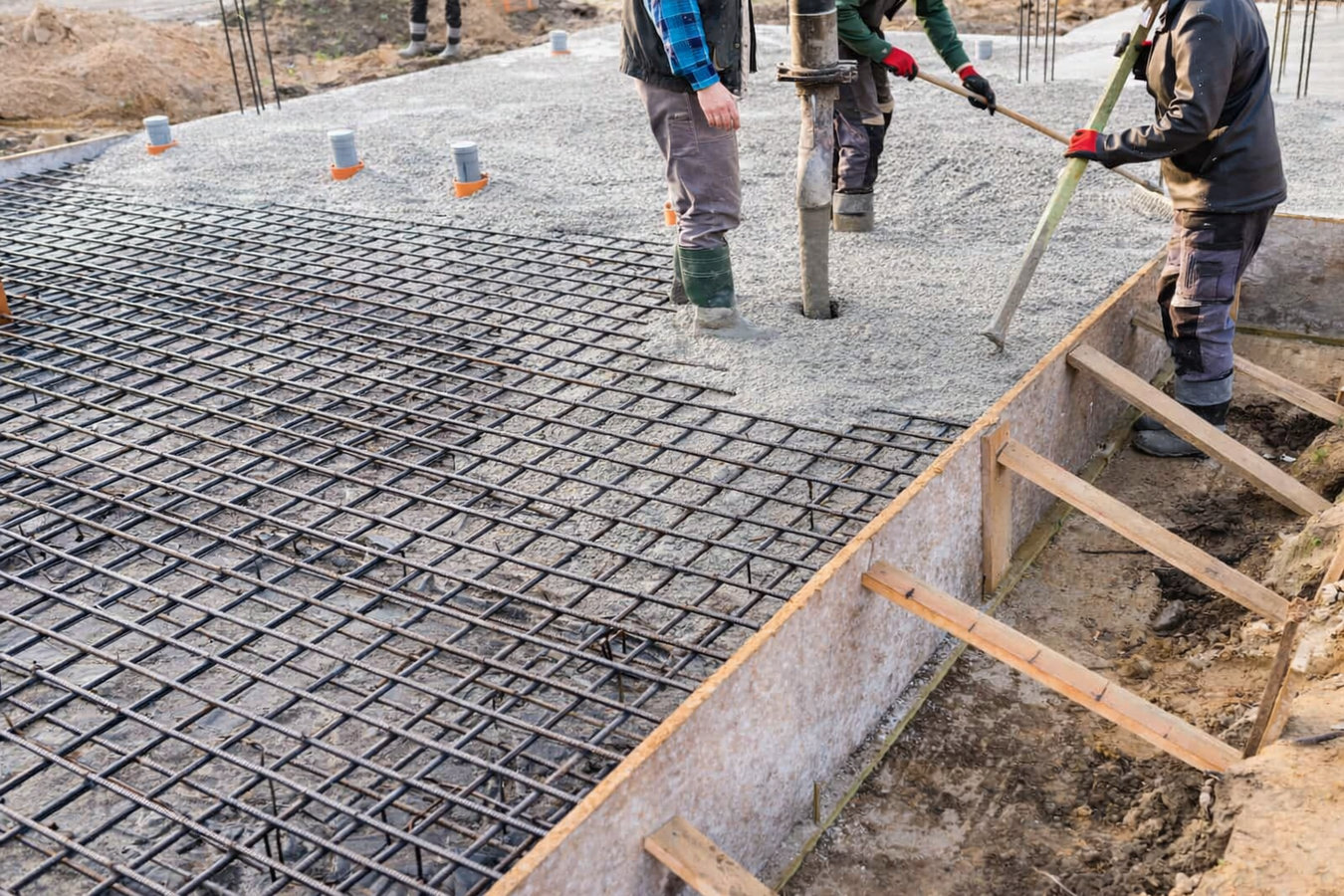
Temple's Blackland Prairie clay shifts with every rain and every drought. We install foundations with proper drainage, steel reinforcing, and soil-specific design so your home stays level for the long run.
Foundation installation in Temple, TX involves site assessment, permit coordination, soil preparation, reinforced concrete forming, and curing management - most residential projects run two to four weeks from first site visit to passed city inspection.
Your foundation is the concrete base that carries your home's full weight and transfers it into the ground below. In Temple, the ground below is Blackland Prairie clay - the kind that moves with every wet season and every dry stretch. That's why foundation installation here requires more than just pouring concrete on a flat lot. Soil assessment, moisture barriers, steel reinforcing, and sometimes post-tension cables are all standard practice because the local ground conditions demand it.
If you already know you'll need a complete slab poured from scratch on a cleared lot, take a look at our slab foundation building service - that page walks through exactly how we handle new construction pours in this part of Central Texas.
If doors or windows that used to open and close smoothly have started sticking, dragging, or leaving gaps at the top or bottom, the foundation may have shifted. In Temple, this commonly happens after a long dry spell when the clay soil shrinks and the slab settles unevenly. It does not always mean a crisis, but it is worth having a professional take a look before the movement gets worse.
Small hairline cracks in drywall are normal in any home, but diagonal cracks that run from the corners of door or window frames - especially if they are wider than a pencil line - can signal that the foundation is moving. Temple's clay soil expands and contracts with the seasons, and homes that sit on it for years can develop this kind of cracking as the slab responds to soil movement below.
If you place a marble on your floor and it rolls consistently toward one wall, or if you notice a visible slope when you look down a long hallway, the foundation may have settled unevenly. This is more common in older Temple neighborhoods where the soil has had decades to shift and compact beneath the slab. Uneven floors rarely fix themselves and tend to get worse over time.
If you own a lot anywhere in Temple or Bell County and are starting a new build, foundation installation is simply the first structural step - there are no warning signs to wait for. Getting a soil assessment done before the pour is especially important in this area given the clay-heavy ground. A thorough site assessment now prevents expensive corrections later.
We install standard slab-on-grade foundations, post-tension slabs, and monolithic pours where the footing and floor are cast in one operation. The right choice depends on your lot's drainage patterns, the size and load of the structure going up, and whether the soil has been disturbed by previous construction or root growth. We assess every site before giving a quote, because a foundation estimate over the phone without seeing the lot is rarely accurate for this part of Texas. Every installation is fully permitted through the City of Temple and receives the required pre-pour inspection before any concrete is placed.
For commercial sites and larger projects that need separate concrete flatwork alongside the foundation, our concrete parking lot building service handles the surrounding hardscape in the same project when that makes sense. For homeowners building or replacing a residential slab, our slab foundation building page covers the new-construction process in detail. We coordinate both services when a project requires them - one crew, one schedule, one point of contact throughout.
The most common residential choice in Temple - reinforced concrete poured over compacted, stabilized soil with a deep perimeter beam.
Best for lots with poor drainage or highly active clay soil - internal cables help the slab resist cracking as the ground moves.
Footing and floor cast in a single operation - efficient for typical residential lots where a two-step pour is not required.
For older Temple homes where the original slab has failed - we assess whether repair or full replacement is the right call.
Full building permit from City of Temple Development Services, pre-pour inspection, and final sign-off handled by our crew.
For businesses, mixed-use buildings, and accessory structures requiring a larger or load-rated concrete base.
Temple sits along the I-35 corridor and has been growing steadily, with new construction spreading across the south and west sides of the city. That new construction is happening on Blackland Prairie clay - soil that is some of the most challenging for concrete work in all of Texas. A contractor coming in from outside Bell County who hasn't poured foundations in this specific soil will often underestimate what it takes. Soil stabilization, deeper footings, proper drainage sloping away from the slab, and a curing plan designed for 100-degree Texas summers are not luxury features here - they are the baseline.
Temple's established neighborhoods near downtown and the medical district have older homes with foundations built in the 1950s through 1980s using methods that did not always account for the local clay soil the way we understand it now. Homeowners in those areas who are replacing or repairing a failing foundation often discover utility lines, disturbed soil from decades of tree root growth, and original construction choices that complicate the job. We serve homeowners across Temple and throughout Bell County, including Killeen and Waco, where the same clay soil conditions and building demands apply to every new foundation project.
You reach out and describe your project - size, location, whether it's a new build or replacement. We ask a few basic questions about the lot and set up a site visit. Most homeowners hear back within one business day to schedule that visit.
We walk your property to evaluate the grade, check drainage patterns, and assess the soil. In Temple, this step matters more than in many other places because the clay soil behaves differently from lot to lot. This is also when we discuss whether a post-tension design or extra drainage measures make sense for your specific site.
Before any grading or forming begins, we apply for a building permit through the City of Temple Development Services office in our name. This process typically takes a few business days to a week. You get the permit number from us so you can verify it directly if you want peace of mind.
The crew grades the site, compacts the soil, lays gravel for drainage, and sets up the concrete forms with steel reinforcing inside. A city inspector visits to confirm everything is correctly placed before any concrete is poured. This step protects you - it's an independent check before the concrete covers it all permanently.
Concrete trucks arrive and the crew pours, spreads, and finishes the slab in one continuous operation. For a typical home, the pour takes a single day. During Temple's summer heat, we schedule pours for early morning and have a plan in place to protect the surface from drying too fast before the concrete has set.
The slab cures over several weeks - we walk you through what to expect and what not to do around it during that window. A final city inspection signs off the permit before framing begins. That permit record stays with the property and protects you when you sell or refinance the home.
We'll visit your lot, assess the soil conditions, and give you a written quote before any work begins. No pressure, no obligation.
(254) 791-8108We work in Bell County every week and know what the clay soil here does in every season. That experience is built into how we assess your lot and write your estimate - soil stabilization, drainage, and the right reinforcing method are part of our standard quote, not upsells you discover later after you've already signed.
From established neighborhoods near the Baylor Scott & White medical complex to new builds on the south and west sides of the city, we've installed foundations throughout Temple and across 12 service areas in Central Texas. That regional volume means we know what city inspectors look for and how to schedule work around local conditions. Learn more about foundation standards from the Post-Tensioning Institute, whose methods are widely used in Texas clay-soil construction.
We pull every permit in our name and coordinate both the pre-pour and final inspections with the City of Temple. That means you are not the responsible party if something is questioned later - we are. And when you sell or refinance your home, the permit history is clean and verifiable.
Your written quote covers site assessment, soil treatment, forming, the pour, and permit fees. If your lot has drainage issues or soil conditions that require extra work, we tell you that before you sign - not halfway through the project. No line items that appear after work is already underway.
A foundation is the one part of your home you cannot easily fix after the fact - the crew you choose for this job matters more than any other concrete decision you make on your build.
Install a commercial-grade concrete parking surface built for Texas heat, freeze cycles, and heavy vehicle loads.
Learn morePour a new residential slab from the ground up with soil stabilization, steel reinforcing, and full permit coverage.
Learn moreSpring build slots book fast in Bell County - reach out now to get your site assessed and your permit process started.